
Feelings
How to Cope After Saying Goodbye in a Long-Distance Relationship
Inside CloserTo
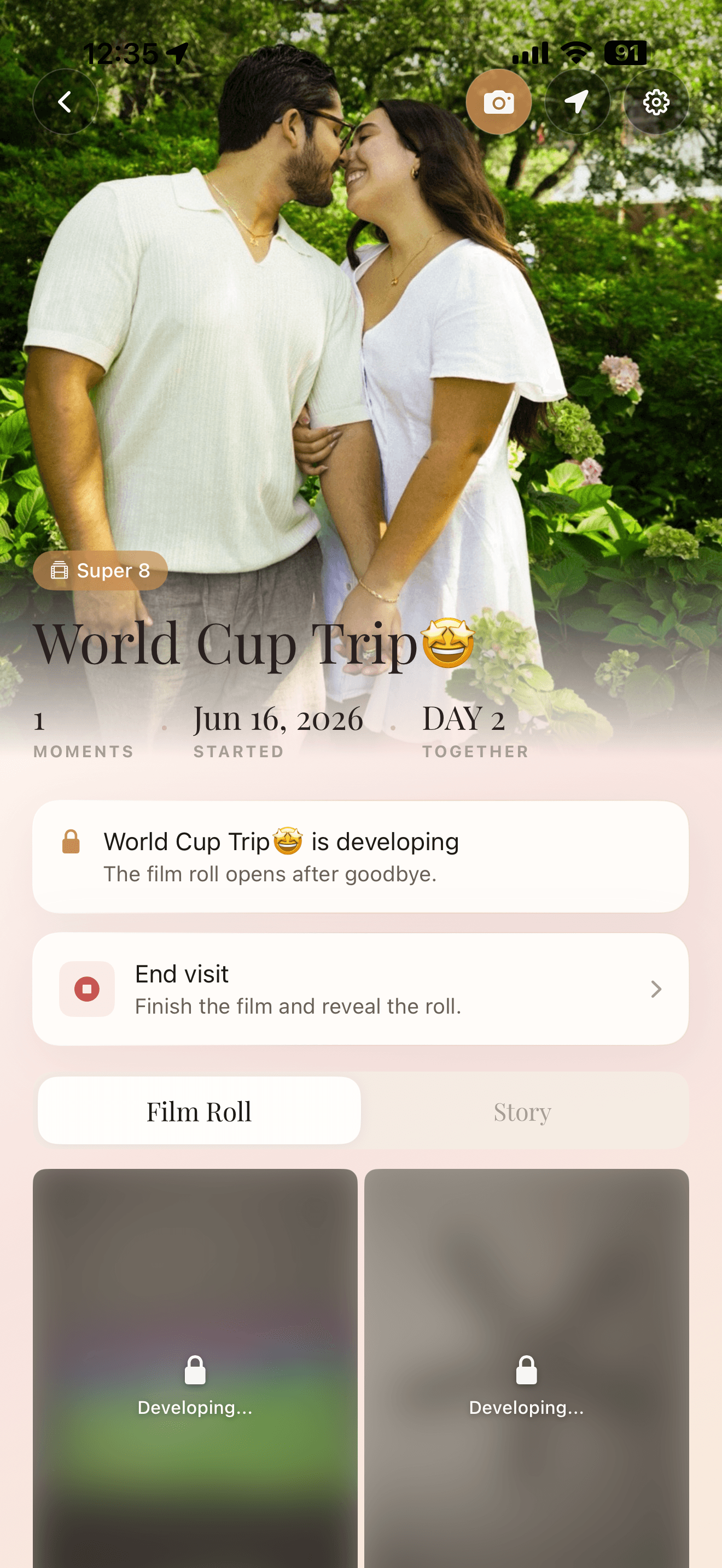
The visit roll gives you something gentle to look forward to after the goodbye hits.
You already know the exact shape of it. The last hug that goes on a beat too long because neither of you wants to be the one who lets go first. The walk back through the airport alone, past the same coffee place you sat at together an hour ago. The seat on the train that’s suddenly, unbearably empty. And then the door of your own apartment, which somehow got quieter while you were gone.
If saying goodbye flattens you for days afterward — if you cry in the security line, or stare at the ceiling that first night, or move through the next morning like you’re underwater — please hear this before anything else: you are not being dramatic, and you are not broken. You’re in love, and you just had to hand that love back to the distance. Of course it hurts. This is a tender, practical guide to the days right after, written by someone who has cried at an airport too.
Why saying goodbye hits so unbelievably hard
It helps to understand that you’re not overreacting — your body is doing exactly what bodies do. For a few days, you lived inside constant closeness. Their voice came from the next room. Their hand found yours without either of you thinking about it. You slept tangled up, woke up to a real face instead of a screen, shared the most ordinary moments — brushing teeth, making coffee, arguing softly about where to eat. All of that floods you with the chemistry of connection: oxytocin, dopamine, a deep nervous-system sense of safe, here, home.
And then it stops. Not gradually — all at once, at a gate or a curb. Your body was calibrated for togetherness and now there’s a sudden withdrawal of it. That drop is real and physical, which is why the sadness can feel almost like a hangover: heavy limbs, a tight chest, a strange flatness. Add the contrast — going from a bed that smelled like them to one that’s suddenly half-empty — and your brain practically can’t help but grieve the gap.
The depth of the goodbye is just the depth of the hello, felt in reverse. You don’t ache like this over someone who doesn’t matter.
So the first reframe is simply this: the size of the sadness is information. It’s telling you how good the real thing is. That doesn’t make it stop hurting — but it can stop you from layering shame on top of the grief, from telling yourself you should be handling it better. You’re handling it exactly as a loving person handles loss.
The first 24–48 hours: lower the bar all the way down
If there’s one thing to take from this whole article, it’s that the day after they leave is not a day for being impressive. It’s a day for surviving gently. You don’t need to be productive. You don’t need to “bounce back.” You need to get through it with as much softness toward yourself as you can manage.
Permission slips for the hard days
- Let yourself cry. Crying isn’t falling apart — it’s your body releasing the pressure. Don’t fight it on the train, in the shower, or into their pillow.
- Don’t schedule anything hard. No big decisions, no draining social obligations, no confronting your inbox at 9pm. Protect this window.
- Eat something real. Grief kills appetite, then low blood sugar makes the grief worse. Even toast counts.
- Tell one person. A friend who gets it, a sister, anyone who’ll text back “that’s so hard, I’m sorry” instead of “at least you got to see them.”
- Keep their hoodie on. Smell is one of the fastest paths to comfort. Wear the thing that still smells like them and don’t apologize for it.
It also helps enormously to close the loop the moment you part. Agree before they leave: text me the second you land. That single ping — “home safe, miss you already” — does more than you’d think. It turns the goodbye from a clean, frightening cut into something that’s still connected, just stretched. If you want more language for these in-between moments, our list of questions to ask in a long-distance relationship is full of gentle prompts for the nights when “how was your day” doesn’t feel like enough.
Move your body, even a little
When the sadness is sitting on your chest, the instinct is to stay perfectly still in the dark — and sometimes, for a few hours, that’s okay. But the thing that actually shifts the heaviness isn’t more stillness; it’s the smallest amount of motion. You don’t have to “work out.” You just have to remind your body it’s still yours.
- Take a shower. Warm water is regulating, and it gives the crying somewhere to go.
- Go outside for ten minutes. Daylight on your face genuinely helps your mood chemistry reset. Walk around the block, no destination.
- Change the sheets. Counterintuitive, but reclaiming the bed as yours instead of a half-empty reminder can take the edge off that first night.
- Do one tiny tidy. Make the coffee cups disappear. A small ordered corner gives your nervous system something to land on.
None of this is about “getting over it.” It’s about giving the feeling a container instead of letting it flood the whole day. Motion first, mood follows — almost always in that order.
Reach back toward your own life
One of the quiet truths of long distance is that the relationship can’t be your only source of warmth — especially in the days when the warmth has just walked through a departure gate. The version of you who has a full, rooted life is also the version of you who survives the goodbyes best. So as the first wave passes, lean back into the things that are yours: the friends, the hobby, the routines that were keeping you company long before this trip.
See a friend in person within a day or two if you can — even a low-key one. Co-existing in the same room as someone who loves you reminds your body that connection is still all around you, not only 600 miles away. This is also the deeper work of making distance survivable: building a life so good that the relationship is the cherry on top, not the whole sundae. We go into that balance in how to survive a long-distance relationship and, more practically, in how to make a long-distance relationship work — both worth a read on a quiet evening when you want to feel a little less alone in this.
Turn the sadness toward the next hello
Here’s the gentle pivot that changes everything about a goodbye: sadness and hope can share the same moment. The grief of “they’re gone” and the anticipation of “but I’ll see them in 47 days” are not enemies. The fastest way to keep the blues from spiraling is to give them somewhere to point — forward.
So before the trip even ends, try to put something on the calendar, however loose. A real date, a tentative month, even just “next time it’s my turn to come to you.” A countdown reframes the distance from an open wound into a finite wait. Every day you wake up, the number is smaller. That’s a tiny, repeatable dose of hope you can hold onto when the apartment feels too quiet.
Then fill the wait with things to look forward to together, not just apart. Plan a movie night you’ll both press play on at the same second. Start a tradition. Send the first message of a game you’ll play across the miles. Our roundups of long-distance relationship date ideas and long-distance relationship activities exist for exactly this — for turning an empty stretch of calendar into a string of small reunions. And if it ever feels like you’re the only couple doing this, the long-distance relationship statistics are a quiet comfort: millions of people are loving across distance right now, and a great many of them make it all the way home to each other.
How to hold each other through it — from afar
Here’s something tender to remember on the train home: they’re almost certainly feeling it too. The person who looked so composed at the gate is probably sitting in their own quiet room right now, missing you in the exact same shape. The post-visit blues are rarely one-sided, which means you get to be soft with each other instead of suffering in parallel.
- Name it out loud. “Today’s a hard one for me, I miss you so much it aches” is intimacy, not burden. Saying it lets them meet you there.
- Ask what they need, not just what you need. Some people want to talk for hours after a goodbye; others go quiet to protect themselves. Neither is rejection.
- Keep a small thread alive. A voice note, a song, a photo from the weekend. Tiny touchpoints beat one giant make-up-for-everything call.
- Plan the next thing together. Looking at flights or a calendar as a team turns the ache into a shared project instead of a private grief.
A shared journal can be a soft place for the feelings that are too big for a text — writing each other a few lines about the visit you just had, or the one you’re already dreaming of. The goal isn’t to perform okay-ness for each other. It’s to let the distance be the hard part, while the two of you stay firmly on the same side of it. If you want a fuller toolkit of apps and rituals couples use to stay close between trips, we rounded them up in the best long-distance relationship apps.
When it’s more than the blues
Almost always, the post-visit heaviness lifts. The first few days are the worst, routine quietly does its work, the next visit comes into focus, and one morning you notice you woke up okay. That arc is normal and you can trust it.
But it’s worth being honest with yourself about the difference between missing someone and something heavier. If the low mood doesn’t lift after a couple of weeks, if it spreads into parts of your life that have nothing to do with your relationship, if you’re not sleeping or eating or finding any pleasure in things you usually love — that deserves real care. Talking to a doctor or a therapist isn’t a sign that your relationship is failing; it’s a sign that you’re taking your own wellbeing as seriously as you take this love. You’re allowed to need support. Reaching for it is one of the strongest, most loving things you can do — for yourself, and for the person waiting on the other end of the distance.
And on the ordinary hard days — the just-said-goodbye, train-window, why-does-this-have-to-be-so-far days — be as kind to yourself as you’d be to a friend in the same seat. You’re doing something genuinely difficult, for someone genuinely worth it. The quiet won’t last forever. The countdown is already running.
Frequently asked questions
- Why am I so sad after my long-distance partner leaves?
- Because your body spent days bathed in closeness — their voice in the next room, their hand finding yours — and then it all stops at once. That sudden drop in oxytocin and the sheer contrast between “together” and “apart” lands as a real, physical ache. It isn’t weakness or a sign your relationship is failing. The sadness is the size of how much you love them. It almost always softens within a few days as your nervous system settles back into your everyday rhythm.
- How long does post-visit depression last?
- For most people the heaviest stretch is the first 24 to 72 hours — the train ride home, that first night alone, the next quiet morning. It usually eases over three to seven days as routine returns and the next visit comes into focus. If a low mood lingers for more than two weeks, follows you into things unrelated to your relationship, or starts affecting your sleep, appetite, or ability to function, that’s worth talking to a doctor or therapist about. That’s not about your relationship being wrong — it’s about taking care of you.
- How do I cope the day after they leave?
- Lower the bar and be gentle with yourself. Don’t schedule anything hard. Move your body even a little — a walk, a shower, fresh sheets. Let yourself cry if it comes. Text them when you land somewhere safe, then look at the countdown to your next visit so the ache has somewhere hopeful to point. And if you captured the visit on a shared roll of film, this is the day to open it — letting the goodbye and the memories live in the same breath is one of the kindest things you can do for yourself.
Keep reading
Feelings
What to Do When You Miss Your Long-Distance Partner
Missing them is not a problem to solve once and for all. It is a feeling to move through, soften, and aim toward the next moment of connection.
App Guides
Open When Letters: 25+ Ideas for Long-Distance Couples
Open when letters let you comfort your partner at the exact moment they need it, even when you’re asleep three time zones away. Here’s what to write and when.
App Guides
The Long-Distance Countdown: Why Counting Down to Your Next Visit Works
A countdown gives every goodbye an expiry date. Here’s the psychology behind why it helps, and how to put your reunion countdown right on your lock screen.